
Raise the mast
The mast is the one part of the trailer that can hurt someone. Every step here exists because of that.
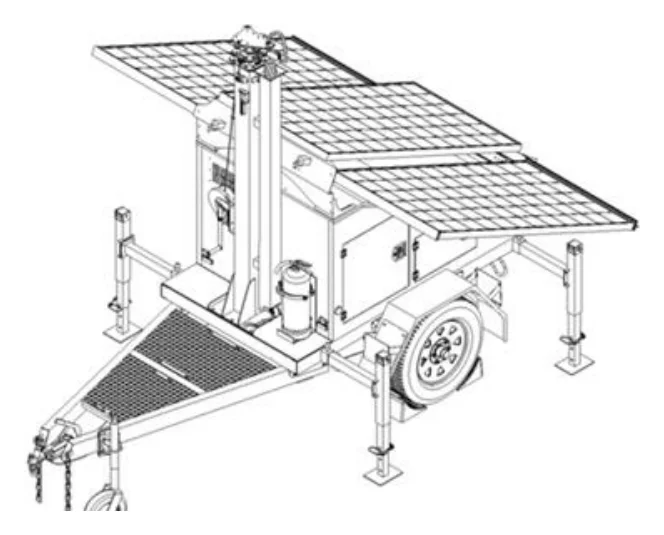
Before you raise
- Confirm the trailer is level and all four outriggers are extended. See Set up on site.
- Check that the camera head and any speaker or strobes at the top are mounted and aimed the way you want them. Adjusting them is much easier at ground level.
- Inspect the mast ropes for wear or damage, and make sure each rope sits centered in its pulley.
- Inspect the mast electrical cord for cuts or worn insulation.
Do not raise the mast if the cord’s insulation is cut or worn through. Bare wire touching the mast or frame can energize the trailer and electrocute you. Repair or replace the cord first.
Raise it
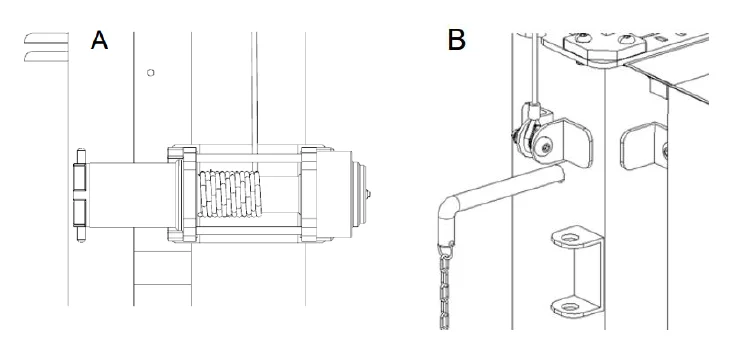
- Look at the winch drum. The steel rope must be wound neatly and under tension (A). Slack rope wears, frays, and can break.
- Turn the hand crank clockwise. The mast rises in sections; watch that the electrical cord pays out from the top sections without snagging. Keep cranking until the mast reaches full height.
- Insert the safety locking pin (B) through the mast.
- Electric winch, if equipped: hold the mast UP button on the controller in the cabinet instead of cranking. A limit switch cuts the winch power at full height; then fit the same locking pin.
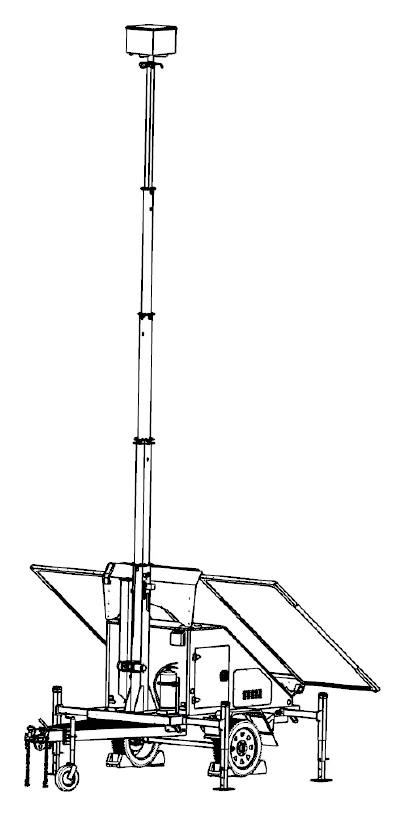
If the rope goes slack or a mast section sticks at any point, stop immediately and call VanBelkum Support. Do not try to free it under load.
Electric winch, if equipped: never touch the neutral gear bolt with the mast up
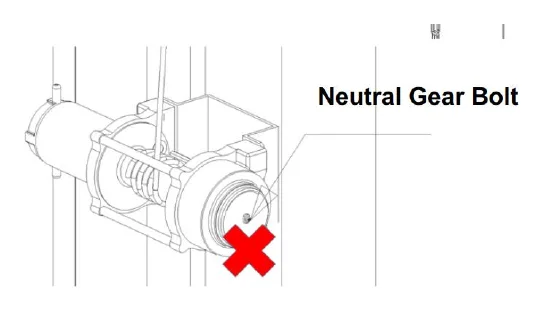
The electric winch has a neutral gear bolt that frees the drum. With the mast extended, operating that bolt drops the mast. It can destroy the equipment and kill someone underneath. Leave it alone unless the mast is fully lowered.
Once it is up
- Keep the safety pin in and the outriggers extended the entire time the mast is up.
- Lower the mast before high winds or an electrical storm, and whenever the trailer will sit unattended through severe weather.
- Never move the trailer, even a few feet, with the mast raised.